Is your Ellicott City home on a hillside that feels tricky to landscape? You’re not alone. Slopes can look messy, drain poorly, and feel hard to maintain. With a few targeted moves, you can turn that hillside into a premium, low‑maintenance feature that photographs beautifully and attracts buyers. This guide shows you how to stabilize the slope, choose the right plants, and use lighting that makes twilight photos pop. Let’s dive in.
Start with the slope you have
Ellicott City sits in a Mid‑Atlantic climate with warm, humid summers and cool winters. Most properties fall near USDA hardiness zones 7a or 7b, but microclimates vary. Verify your exact zone before finalizing plants.
Local soils range from loams to silty clays, often on rolling Piedmont terrain. Slopes here can show surface erosion, compacted spots, and shallow topsoil. Before you plant, do a basic soil test and scan for compaction, perched water, or exposed bedrock.
You’re also in the Chesapeake Bay watershed, so managing runoff is more than a good idea. It is encouraged through Bay‑friendly practices. If you plan major earthwork, new terraces, or a retaining wall, check Howard County permitting rules and any HOA covenants first. Many areas require permits for retaining walls around 4 feet or higher. Confirm requirements before you build.
Fix drainage first
Nothing reads premium if water is carving ruts through your yard. Control concentrated flow before planting.
- Regrade to spread runoff and add level spreaders so water disperses.
- Install French drains or rock‑lined swales where water concentrates.
- Use coir logs, straw mulch, or erosion blankets on new slopes until plants establish.
- Choose plants with fibrous or deep roots to hold soil while your system settles.
If you see standing water, gully erosion, or suspect a perched water table, bring in a landscape contractor or civil engineer with local hillside experience.
Design that looks premium
Work with the grade, not against it. Horizontal lines make slopes feel calm and intentional.
- Break long slopes into 2 to 4 broad terraces. Give each tier a purpose, like an entry bed, shrub band, or ornamental grass layer.
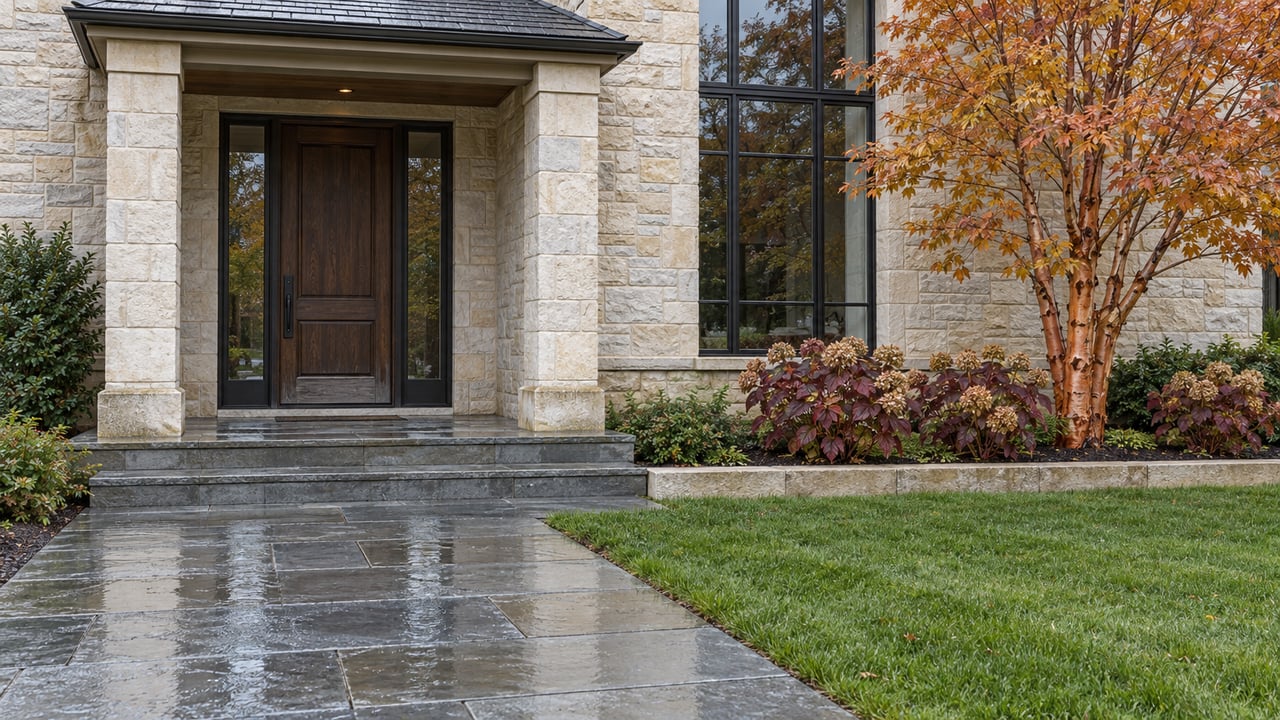
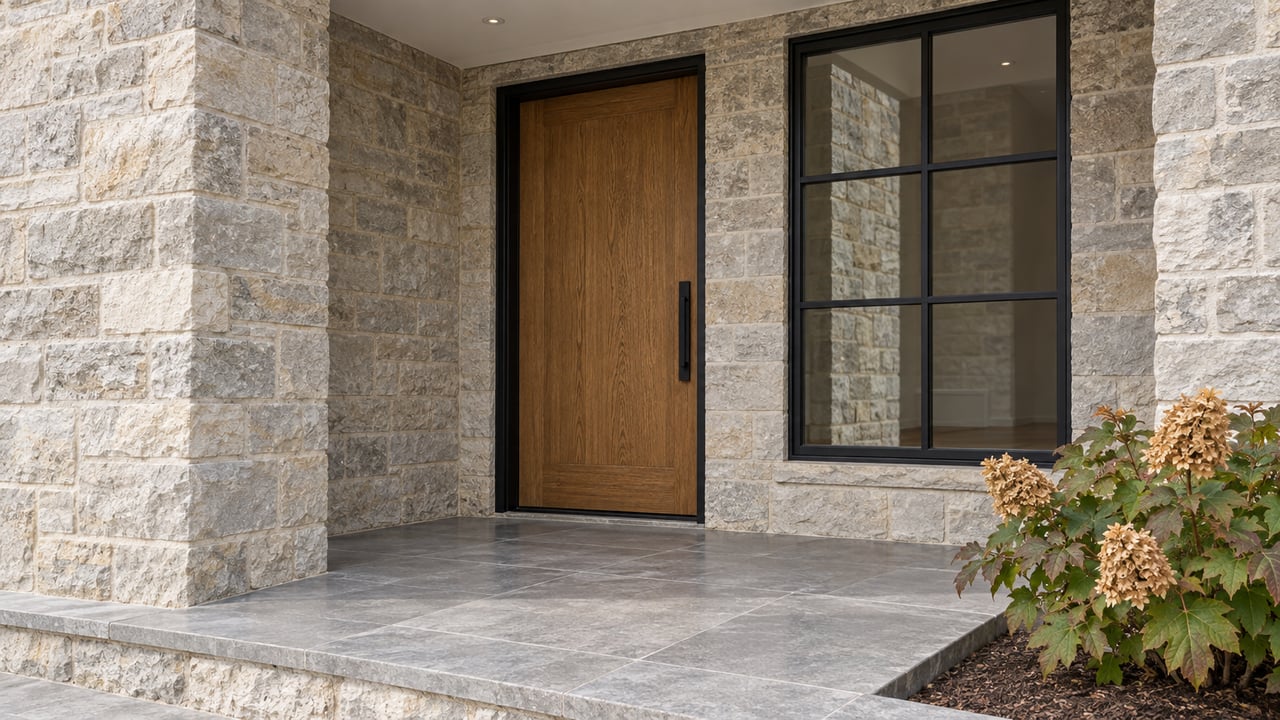
- Use natural stone, dry‑stack or mortar‑joint walls, or high‑quality segmental blocks with clean lines and tight joints.
- Choose permeable pavers or gap‑joint stone for paths to reduce runoff and elevate the look.
- Add wide, gentle steps with level landings for safe access and better photo angles.
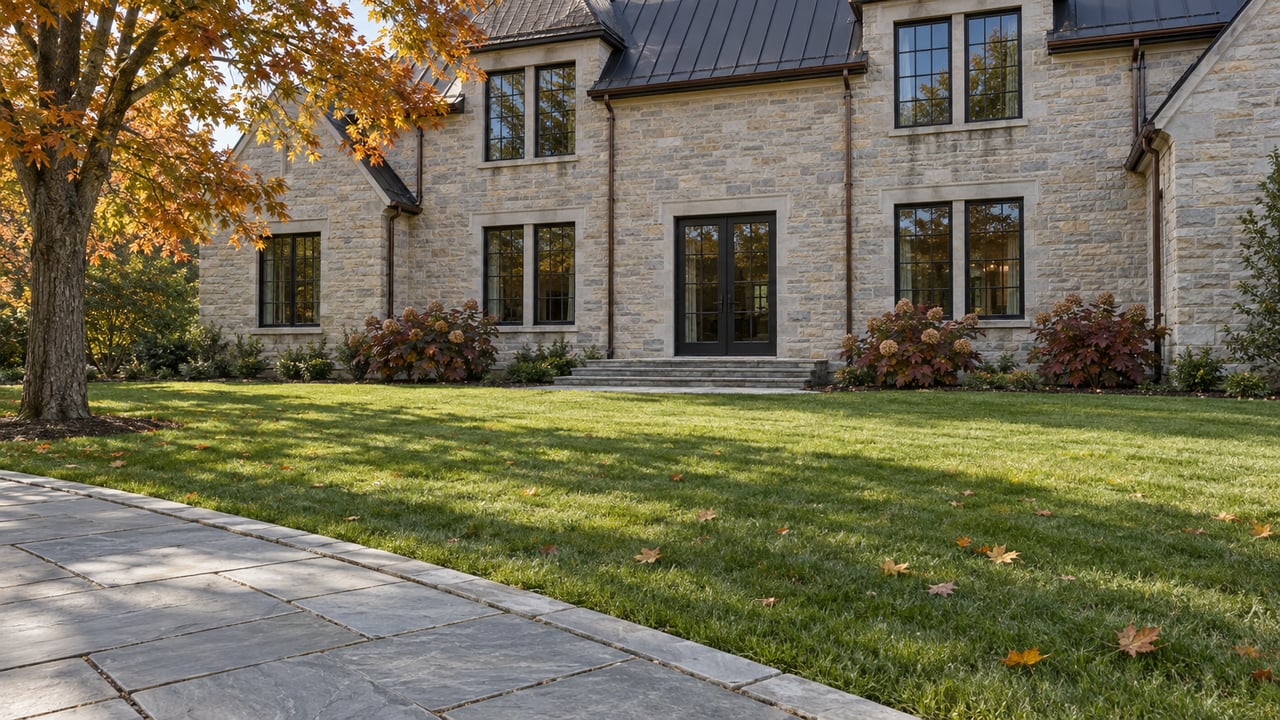
- Keep materials consistent across the front yard for a high‑end read.
Massing and layers for impact
On a slope, many small, different plants look busy. Massing reads premium.
- Create large swaths of one or two plants per tier. Repeat those masses to build rhythm.
- Aim for three vertical layers: low groundcover or grasses, medium shrubs, and a few small specimen trees.
- Include evergreen structure for winter backbone and a few spring or fall accents for listing photos.
Plant choices that thrive here
Prioritize native or well‑adapted plants for deep roots, drought tolerance, and low maintenance. Where deer pressure is common, select tougher, deer‑resistant species. Avoid species known to be invasive in Maryland.
Small trees and specimens
- Serviceberry (Amelanchier) for four‑season interest
- Dogwood (Cornus florida) or Cornus mas for spring bloom and partial shade
- Winterberry holly (Ilex verticillata) in wetter pockets, paired with a male pollinator
Use small trees sparingly on front slopes and keep them clear of foundations and walls.
Shrubs for structure and erosion control
- Inkberry holly (Ilex glabra) for evergreen massing
- Arrowwood viburnum (Viburnum dentatum) for multi‑season appeal
- Virginia sweetspire (Itea virginica) for arching form and great fall color
- Summersweet (Clethra alnifolia) for fragrant summer blooms and moisture tolerance
- Rhododendrons or native azaleas for acidic, part‑shade slopes
Grasses, sedges, and perennials
- Little bluestem (Schizachyrium scoparium) for movement and low maintenance
- Switchgrass (Panicum virgatum) for deep roots and showy seedheads
- Pennsylvania sedge (Carex pensylvanica) for drier shade groundcover
- Foamflower (Tiarella cordifolia) and creeping phlox (Phlox subulata or stolonifera) for low mats and spring color
Groundcovers for erosion control
- Wild strawberry (Fragaria virginiana) for a low, spreading matrix
- Native creeping phlox and epimedium in shade
- Use periwinkle (Vinca minor) cautiously since it can spread aggressively in some areas
Plant slightly closer than standard spacing and use larger containers for an immediate full look. Install drip irrigation to speed establishment and mulch 2 to 3 inches to suppress weeds and conserve moisture.
Lighting that photographs beautifully
Great lighting turns a steep yard into a showpiece, especially for twilight listing photos. Think layered and low intensity, not bright floodlights.
- Use shielded, low‑voltage LED fixtures for paths, steps, and subtle wall washes.
- Recess step lights into risers to cut glare and improve safety.
- Favor warm color temperature, around 2700 to 3000 K, for an inviting tone.
- Target low lumen levels: path lights around 50 to 150 lumens and accents around 100 to 300 lumens depending on distance.
- Keep fixtures out of direct camera view. Aim slightly downward and use wider beams for closer beds.
- Avoid mixing very different color temperatures. Consistency looks polished.
- Use dimmers, timers, or photocells so you can set lights for ideal twilight shots.
Quick wins before you list
If you have just a few days, focus on moves that punch up photos and curb appeal fast.
- Clean out overgrown beds and remove dead material.
- Add a fresh layer of dark mulch for crisp contrast.
- Mass‑plant a few drifts of ornamental grasses or evergreen groundcovers.
- Add a handful of quality, low‑glare path lights and set the porch light to 2700 to 3000 K.
- Power‑wash walkways, tighten any loose stones, and prune to reveal the home’s architecture.
A phased plan that works
If you have more time, stage improvements so you get stability and beauty that lasts.
- Phase 1: Fix drainage and erosion. Add basic terraces if needed.
- Phase 2: Build long‑lived hardscape like stone steps and walls. Install structural shrubs.
- Phase 3: Underplant with grasses and perennials. Fine‑tune lighting.
Inspect retaining walls and drains annually for movement or clogs. Native‑focused slopes usually need seasonal mulching, light pruning, and debris cleanup once established. After the first 1 to 3 years, irrigation needs typically drop.
Cost expectations
Set your budget where it matters most. Drainage correction and engineered walls typically drive the highest costs. Professional grading, stone materials, and irrigation land in the medium to high range. Planting and lighting are easier to phase, and container stock massing can lower upfront plant costs. Over time, native, drought‑tolerant plantings and drip irrigation help keep ongoing costs low.
Compliance and local checks
You benefit twice by being Bay‑friendly: better slope stability and responsible runoff management. Check Howard County permitting early for grading, retaining wall heights, stormwater controls, and any tree removal rules. For plant selection and soil testing, the University of Maryland Extension and the Maryland Native Plant Society are helpful resources. For dark‑sky friendly lighting, follow shielded fixtures and sensible lumen limits to reduce glare and neighbor impact.
Ready your hillside for market
When your slope looks intentional, stable, and easy to care for, buyers notice. The right massing, smart drainage, and warm, layered lighting create a premium first impression and stronger photos. If you want a targeted plan that aligns with your list timeline, let a local pro coordinate the pieces so you focus on results.
If you’re preparing to sell in Ellicott City and want to amplify curb appeal, schedule a tailored strategy session. Connect with Unknown Company to map out high‑impact steps that fit your goals.
FAQs
What’s the first step for a sloped yard in Ellicott City?
- Start with drainage and erosion control, then plan terraces and plant masses so the slope looks intentional and stays stable.
Do I need a permit for a retaining wall in Howard County?
- Many jurisdictions require permits for walls around 4 feet or higher, but rules vary, so check Howard County permitting and HOA covenants before building.
Which hillside plants are low‑maintenance and hardy here?
- Try inkberry holly, arrowwood viburnum, Virginia sweetspire, little bluestem, switchgrass, and Pennsylvania sedge, verifying your exact hardiness zone.
How can I prevent erosion while new plants establish?
- Use coir logs, straw mulch, or erosion blankets, and choose deep or fibrous‑rooted plants to stabilize soil as roots develop.
What lighting settings look best in listing photos?
- Warm LEDs at 2700 to 3000 K with shielded, low‑lumen fixtures layered along paths, steps, and walls create an inviting, photo‑friendly glow.
How fast can I boost curb appeal before listing?
- In 1 to 3 days, clean and mulch beds, mass‑plant a few drifts, add quality path lights, and power‑wash hardscape for an immediate upgrade.